Magnetism 3D Lab

Free for everyone · No signup required · No ads

See magnetic fields come alive.

Build wires, solenoids, and magnets in your browser. The electromagnetic field lab used in physics classrooms since 2003 — now browser-native, no install.

Runs on Chromebooks · For universities and AP Physics classrooms
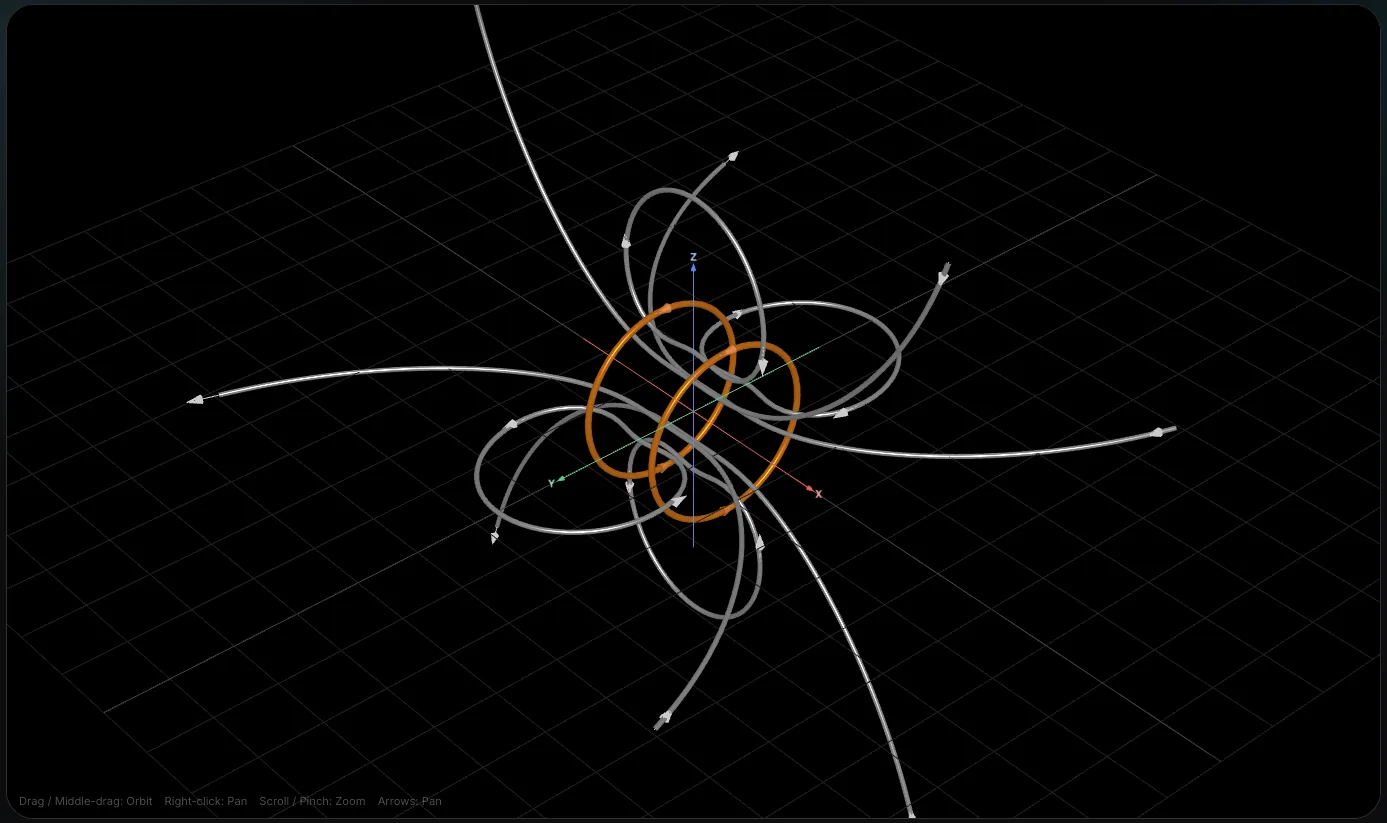
3D rendering of current-loop coils with magnetic field lines visualized in Magnetism 3D Lab.

Inside the editor

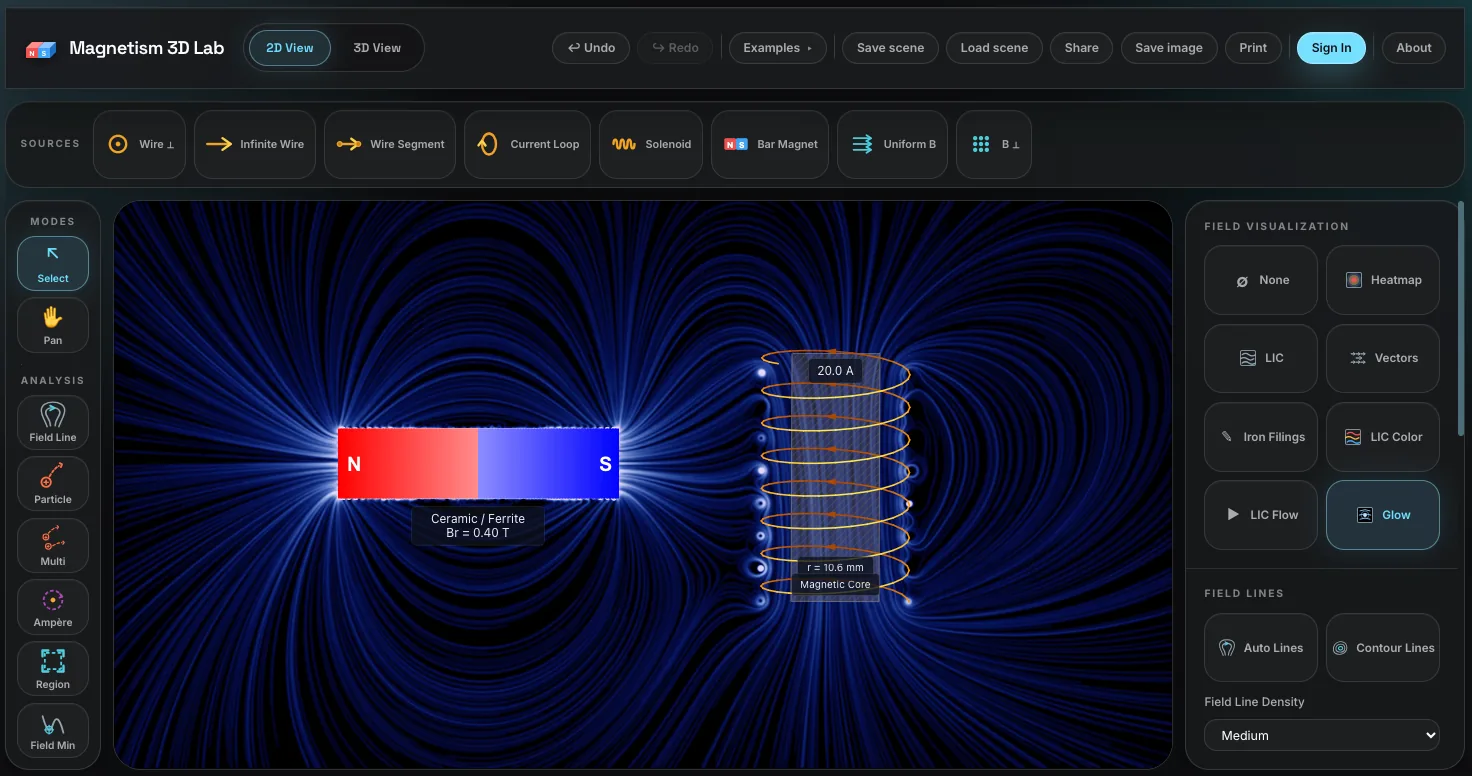
Drop magnetic sources from the toolbox, tweak parameters in the inspector, watch the field update live. Toggle between 2D and 3D, save scenes, share them as URLs.

Magnetism 3D Lab editor with a magnetic scene loaded — toolbar across the top, inspector panel on the side, and the field visualization filling the main canvas.

What makes it different

Browser-native. No install.

Students open a link on any Chromebook or laptop. No desktop-app support tickets. No IT approvals. No version drift.

Students build, not watch.

Every scene is constructed from scratch — drag a solenoid, set the current, see the field. Not a fixed demo on rails.

Visualization depth.

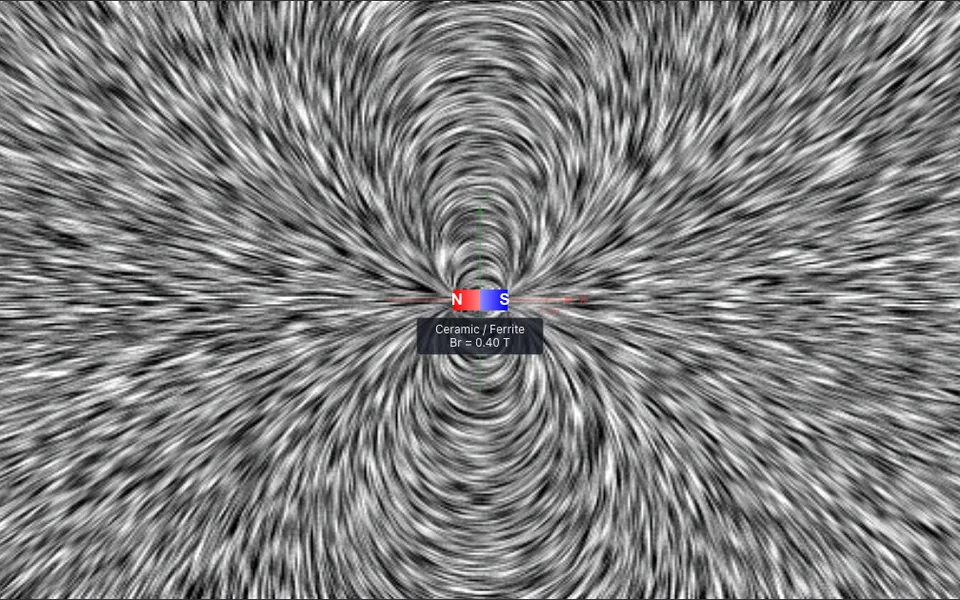
Linear Integral Convolution. Ampère's law path integrals. Charged particle trajectories in 2D and 3D. Not just arrows.

Embed in any course page.

Drop the live simulator into Canvas, Blackboard, Schoology, Moodle, or Notion with a one-line <iframe>. Student-built scenes are deep-linkable.

Aligned to: AP Physics C · IB Physics HL · NGSS HS-PS2 · Halliday/Resnick Ch. 28–32

Start from a pre-built example

Magnetic field between two coaxial Helmholtz coils — 3D visualization with streamlines showing the central uniform-field region.

Helmholtz Coils

Two coaxial current loops produce a uniform field — the classic setup.

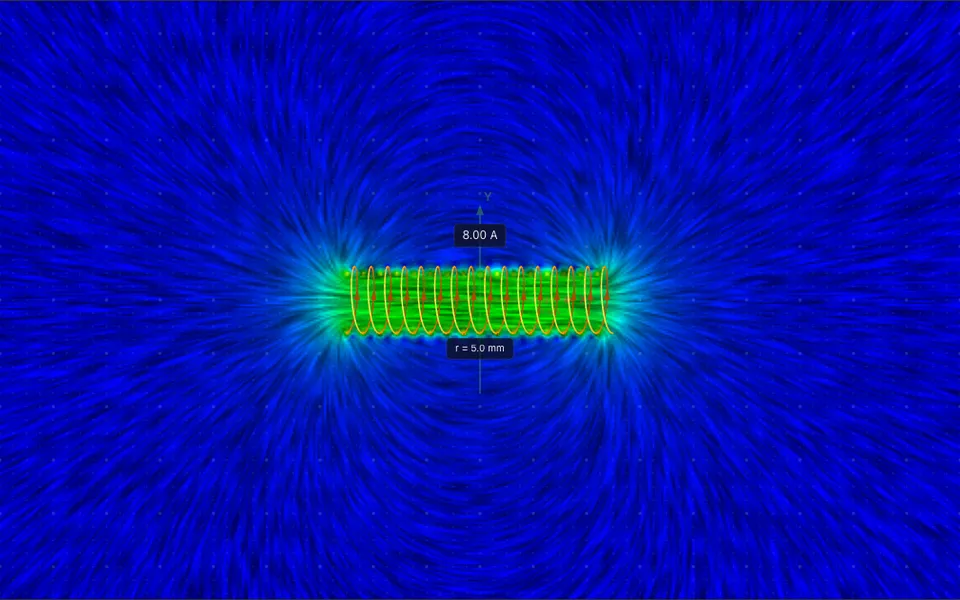
Long air-core solenoid with Linear Integral Convolution visualization — continuous field lines showing the near-uniform interior and sparse exterior.

Solenoid with LIC

Linear Integral Convolution reveals the near-uniform field inside.

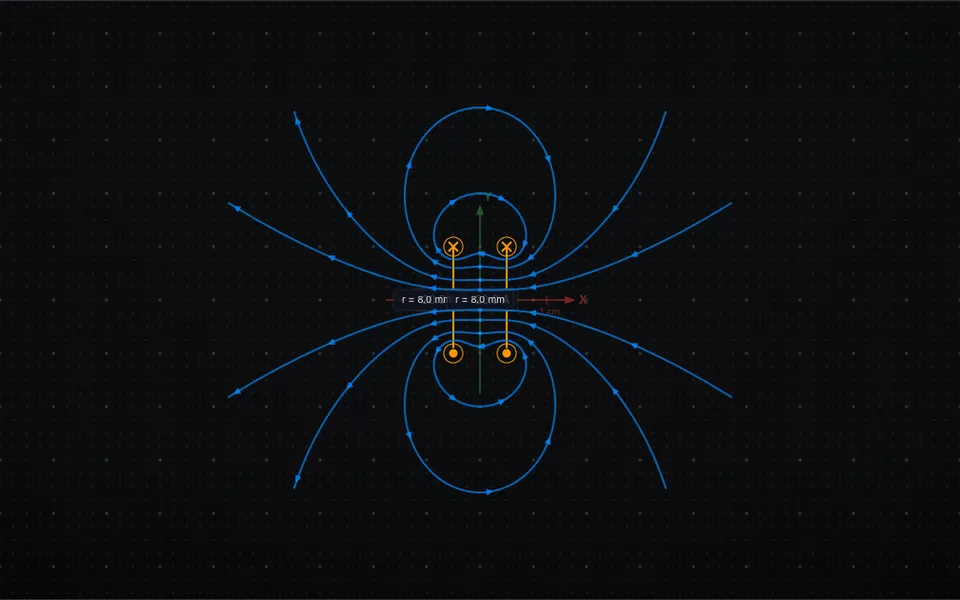
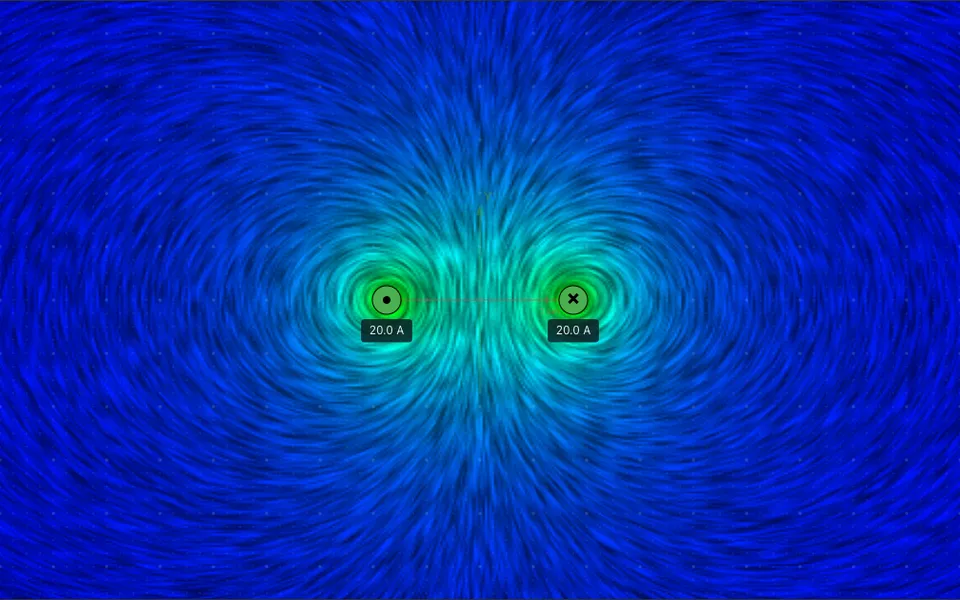
Two long straight wires carrying equal and opposite currents — magnetic field lines forming the classic antiparallel repulsive pattern.

Antiparallel Wires

Two wires, opposite currents — the textbook repulsive pattern.

Single ferrite bar magnet rendered with iron-filings visualization — dipole field pattern looping from the north pole to the south pole.

Bar Magnet Dipole

Iron filings visualization of the classic dipole pattern from N to S.