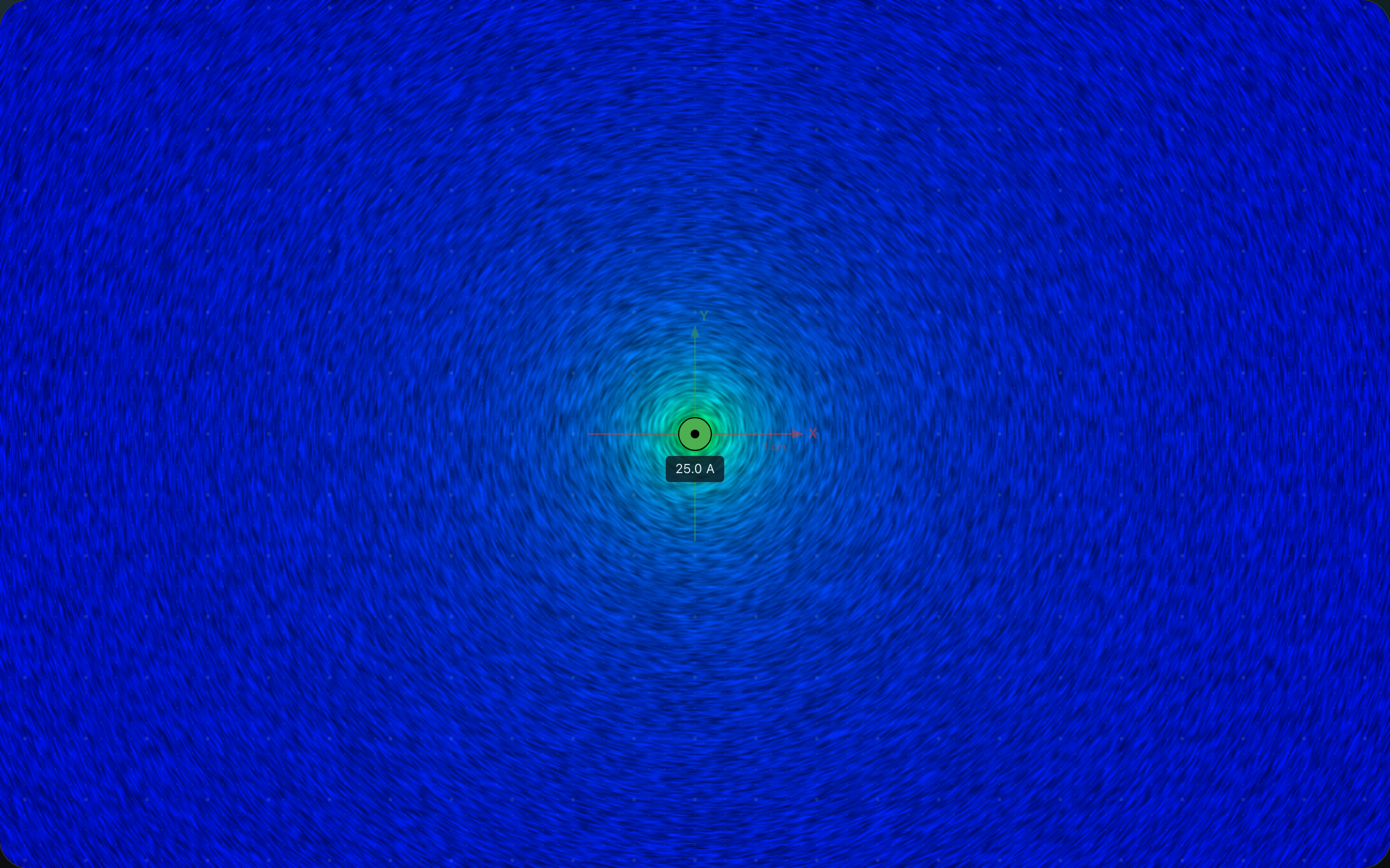
Straight Wire
A single current-carrying wire produces concentric circular field lines — the canonical Biot-Savart law demonstration.
2D
NGSS HS-PS2-5
AP Physics C
IB Physics 5.4
Twenty interactive magnetic-field simulations, organized by topic and mapped to NGSS, AP Physics C, and IB Physics standards. Click Open to run a simulation in the browser, or Copy embed to drop it into a Canvas, Blackboard, Schoology, Moodle, or Notion page.
From a single straight wire to toroidal coils — the geometries that define Biot-Savart and Ampère's law.
A single current-carrying wire produces concentric circular field lines — the canonical Biot-Savart law demonstration.
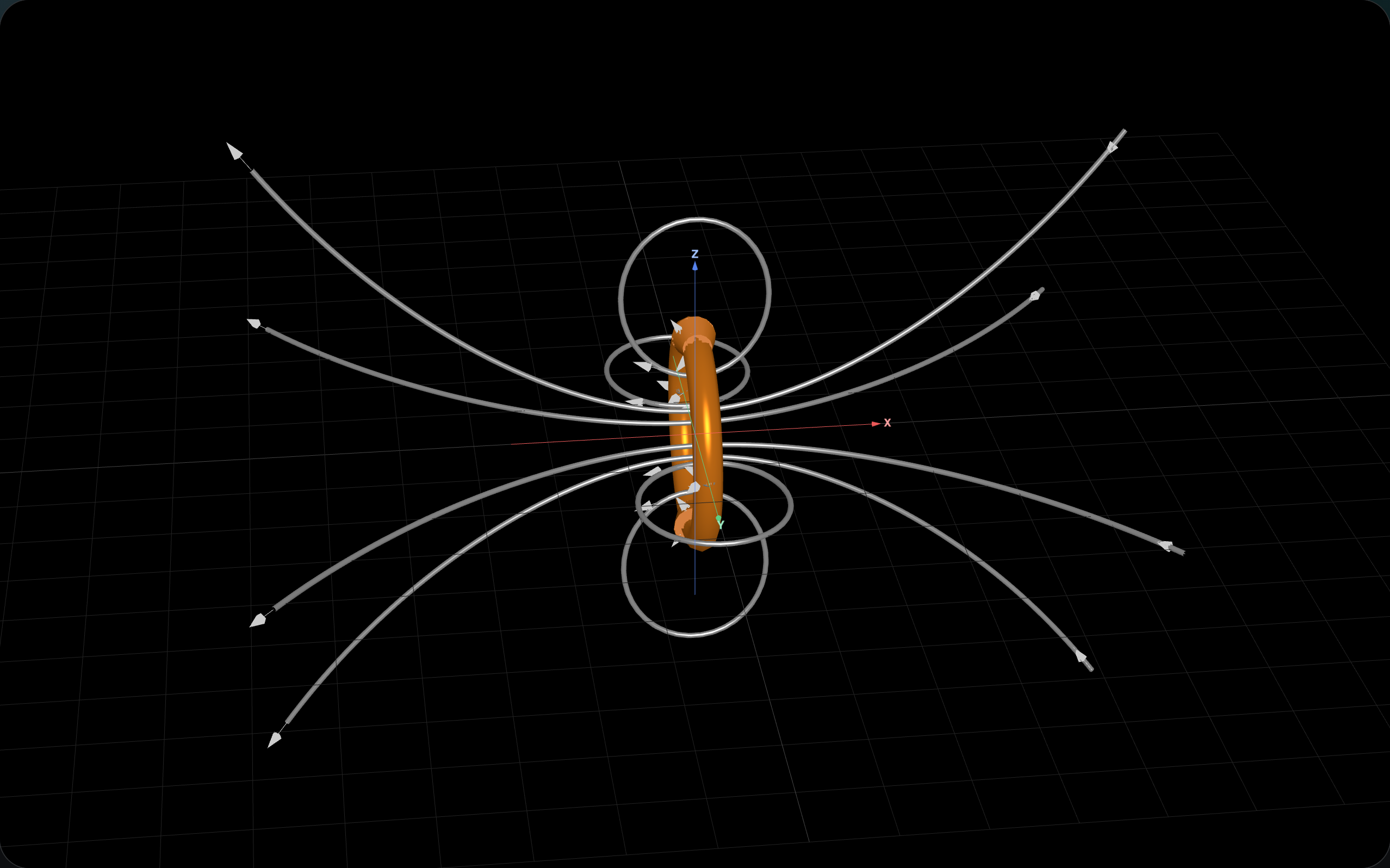
A single circular loop of current — the building block for understanding solenoids, Helmholtz pairs, and toroids.
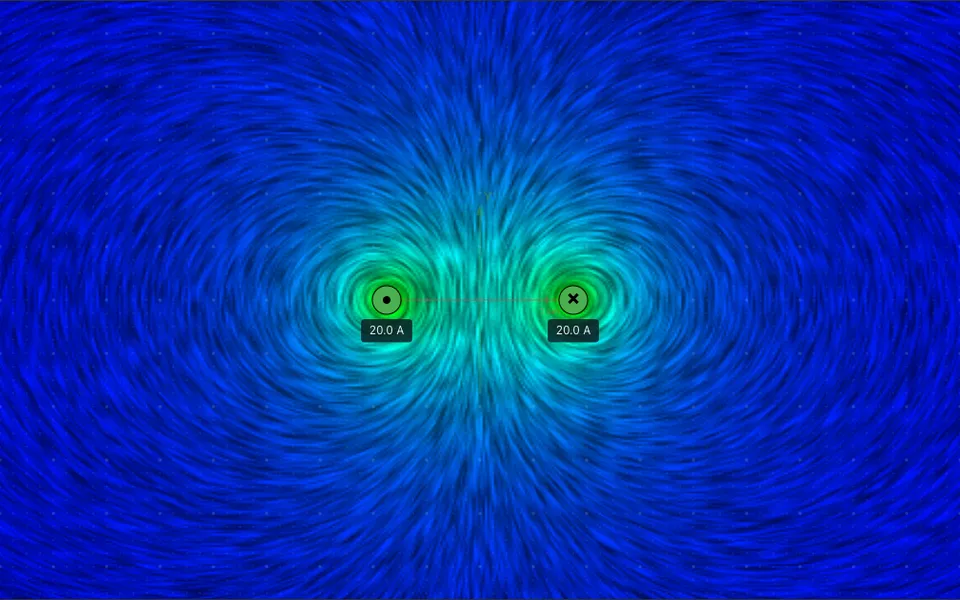
Two long straight wires carrying equal currents in opposite directions. The field lines show the repulsive interaction pattern.
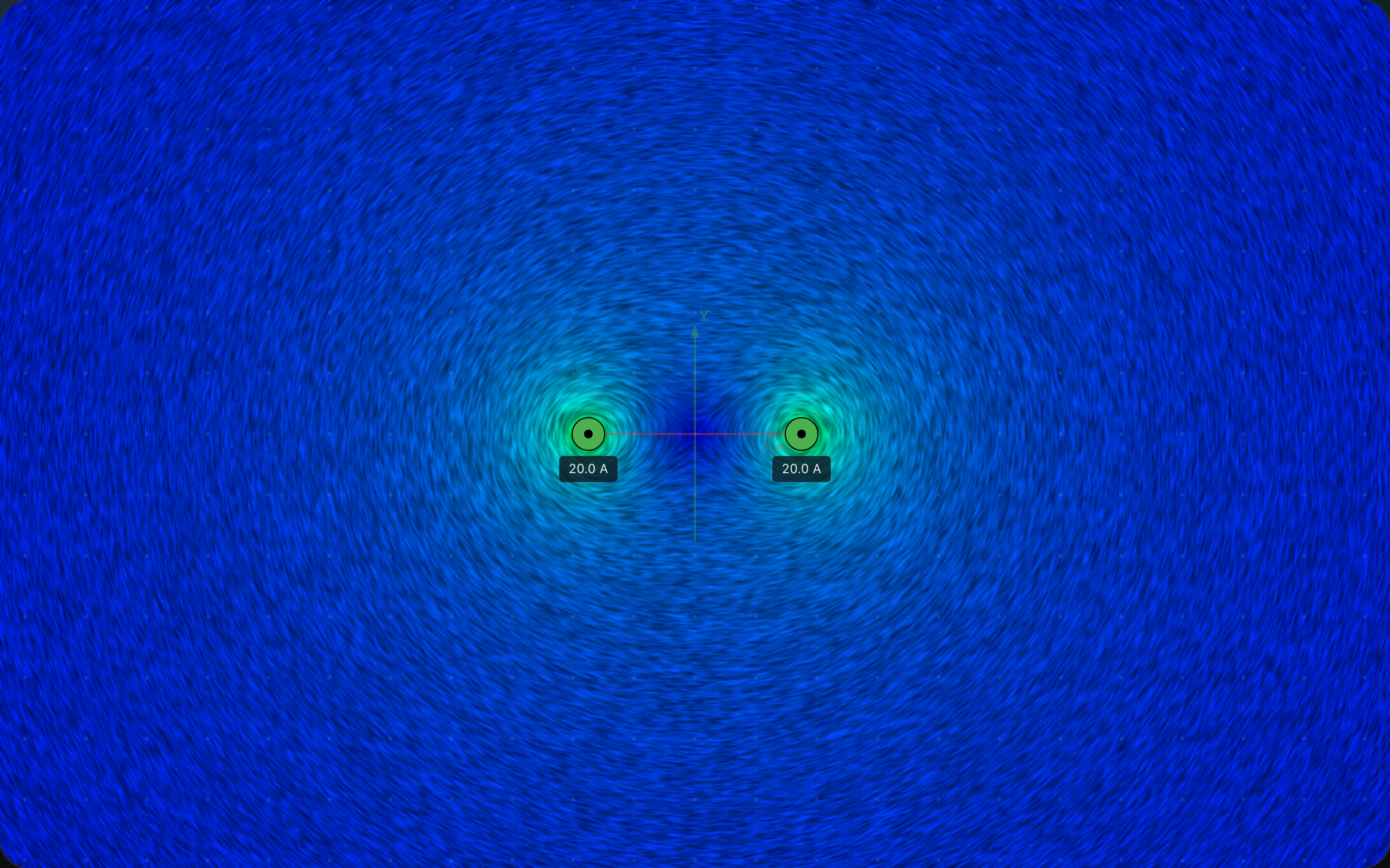
Two wires carrying currents in the same direction — field lines wrap both wires together and the wires attract.
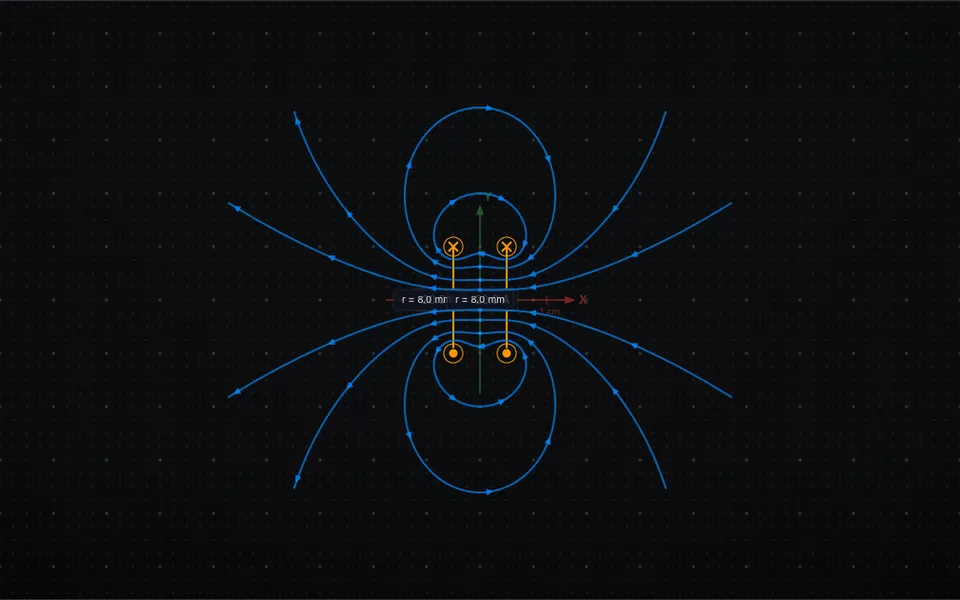
Two coaxial current loops spaced one radius apart produce a highly uniform magnetic field between them.
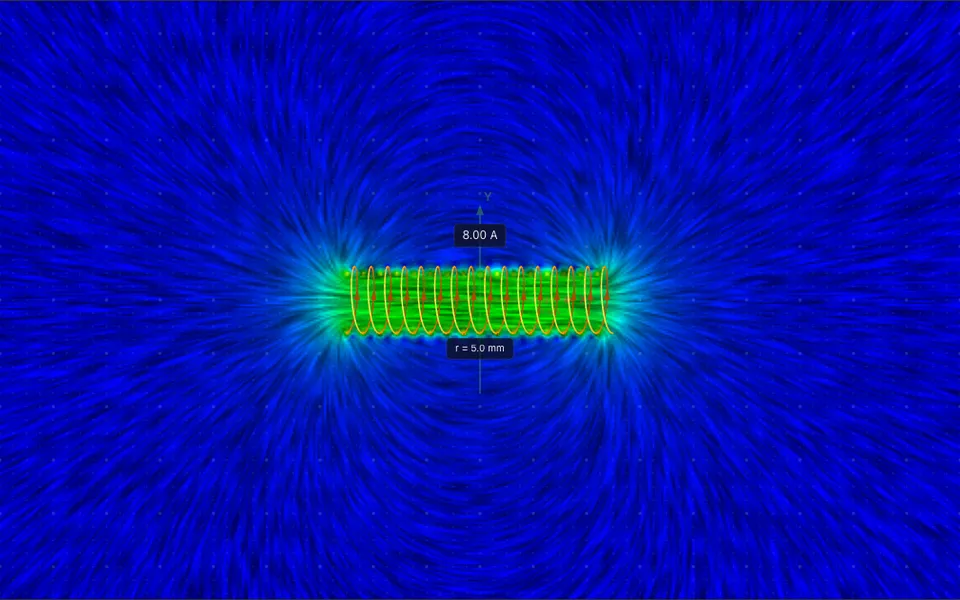
A long solenoid. Linear Integral Convolution visualization reveals the near-uniform internal field and weak external field.
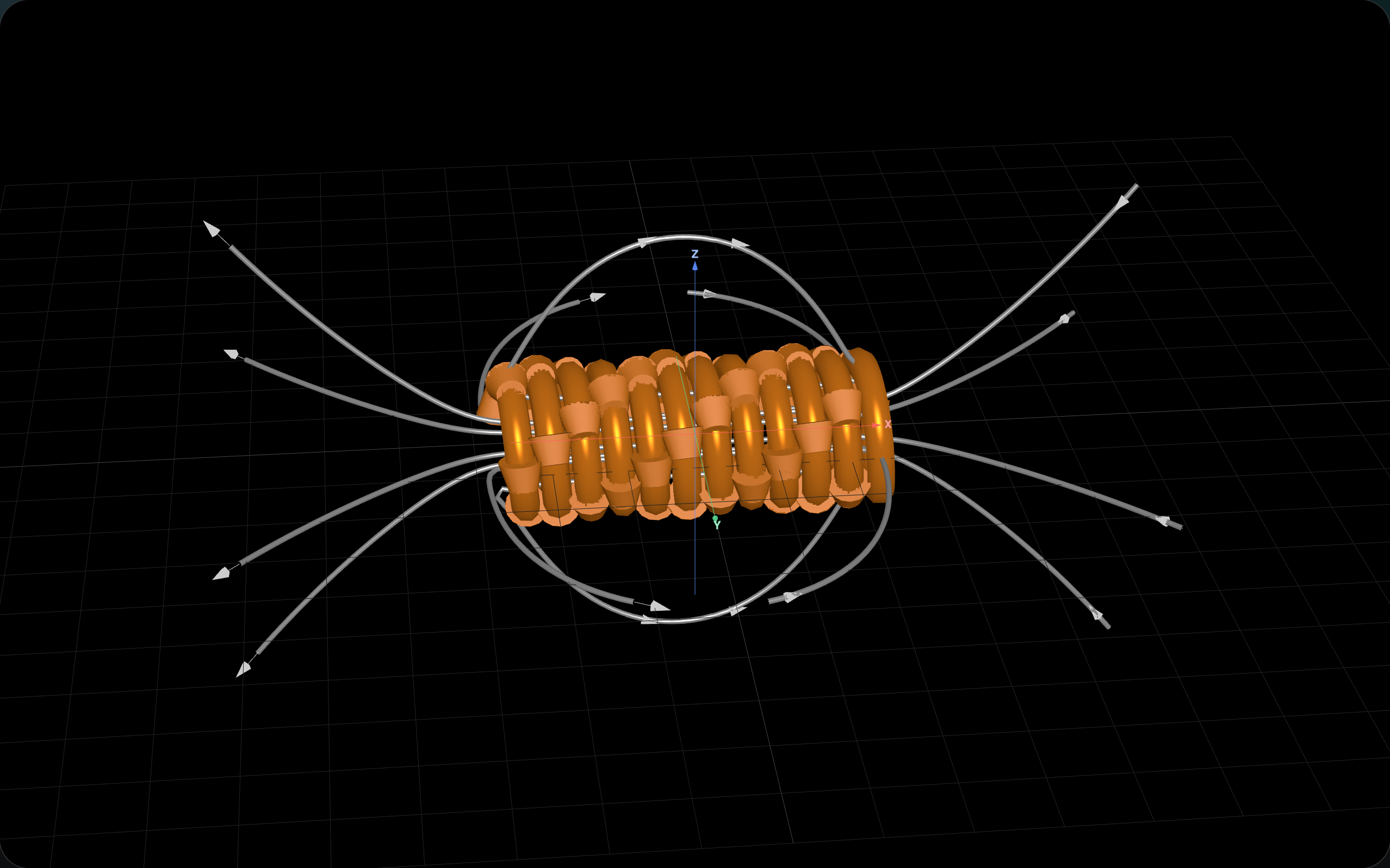
The same solenoid rendered in 3D with traced field lines — rotate to see how the internal field aligns with the axis.
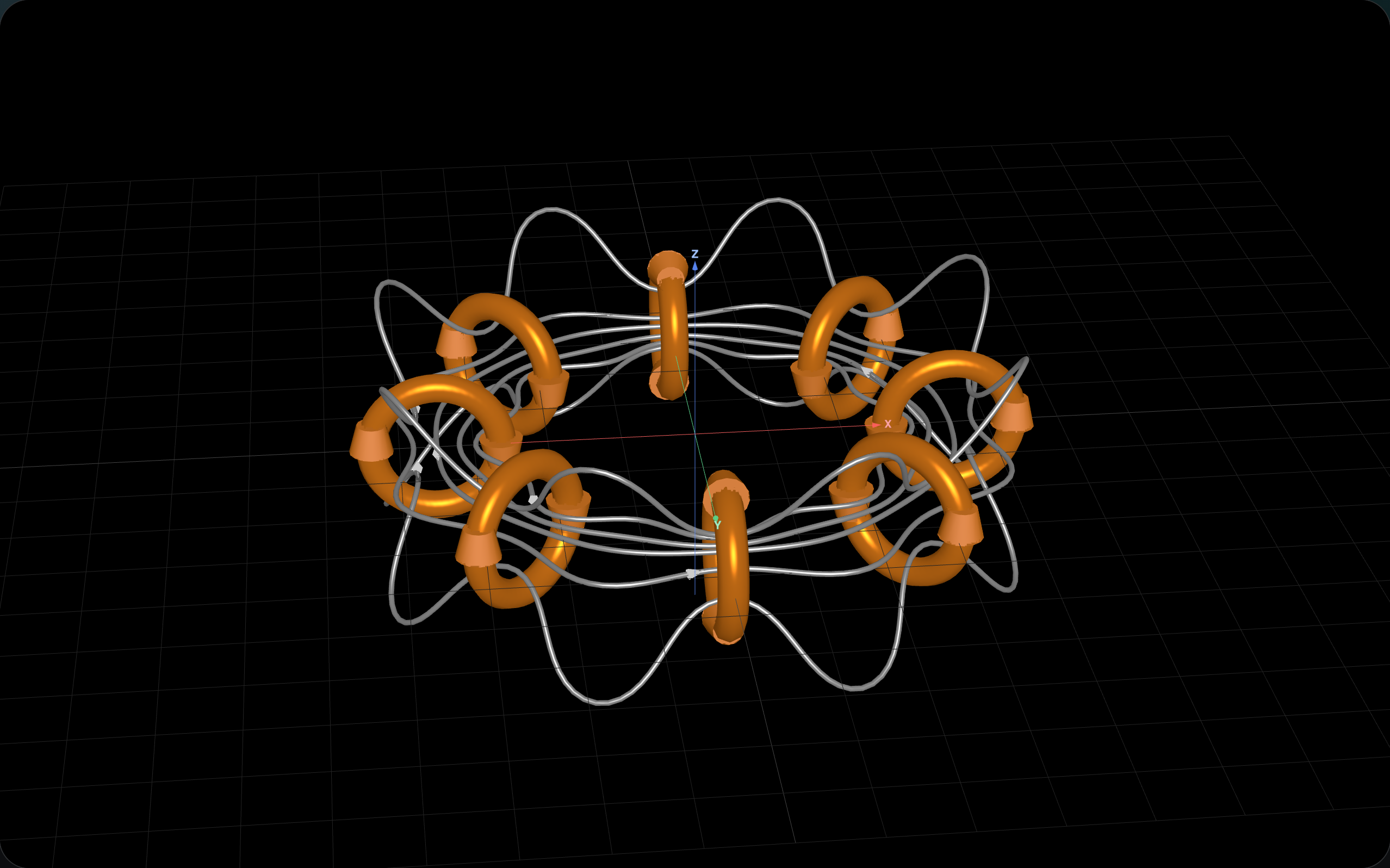
Eight current loops arranged around a ring form a toroid. The field is almost entirely confined inside the torus, circling the major axis.
Bar magnets, paired dipoles, and gap geometries — the patterns students compare to current loops to build dipole intuition.
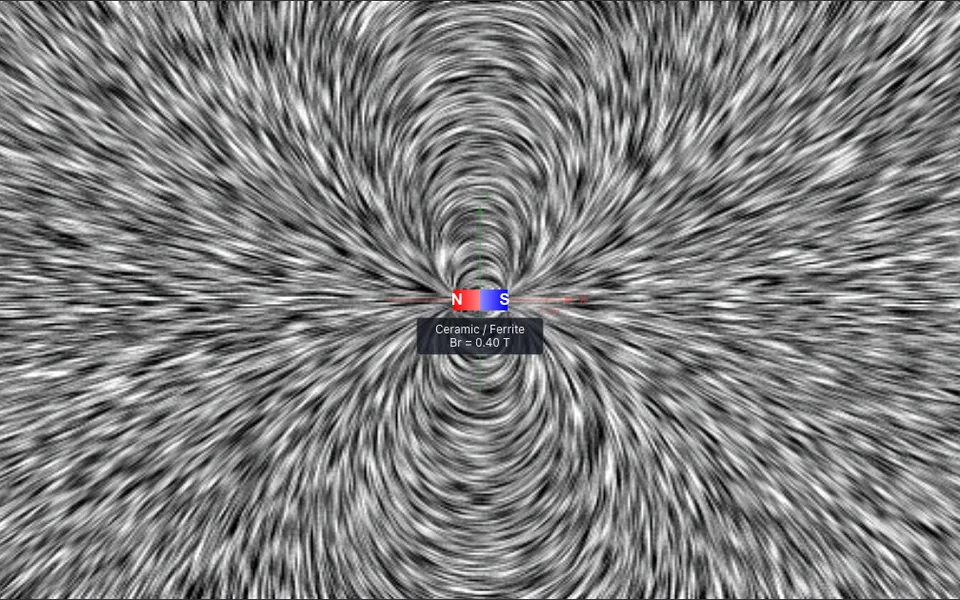
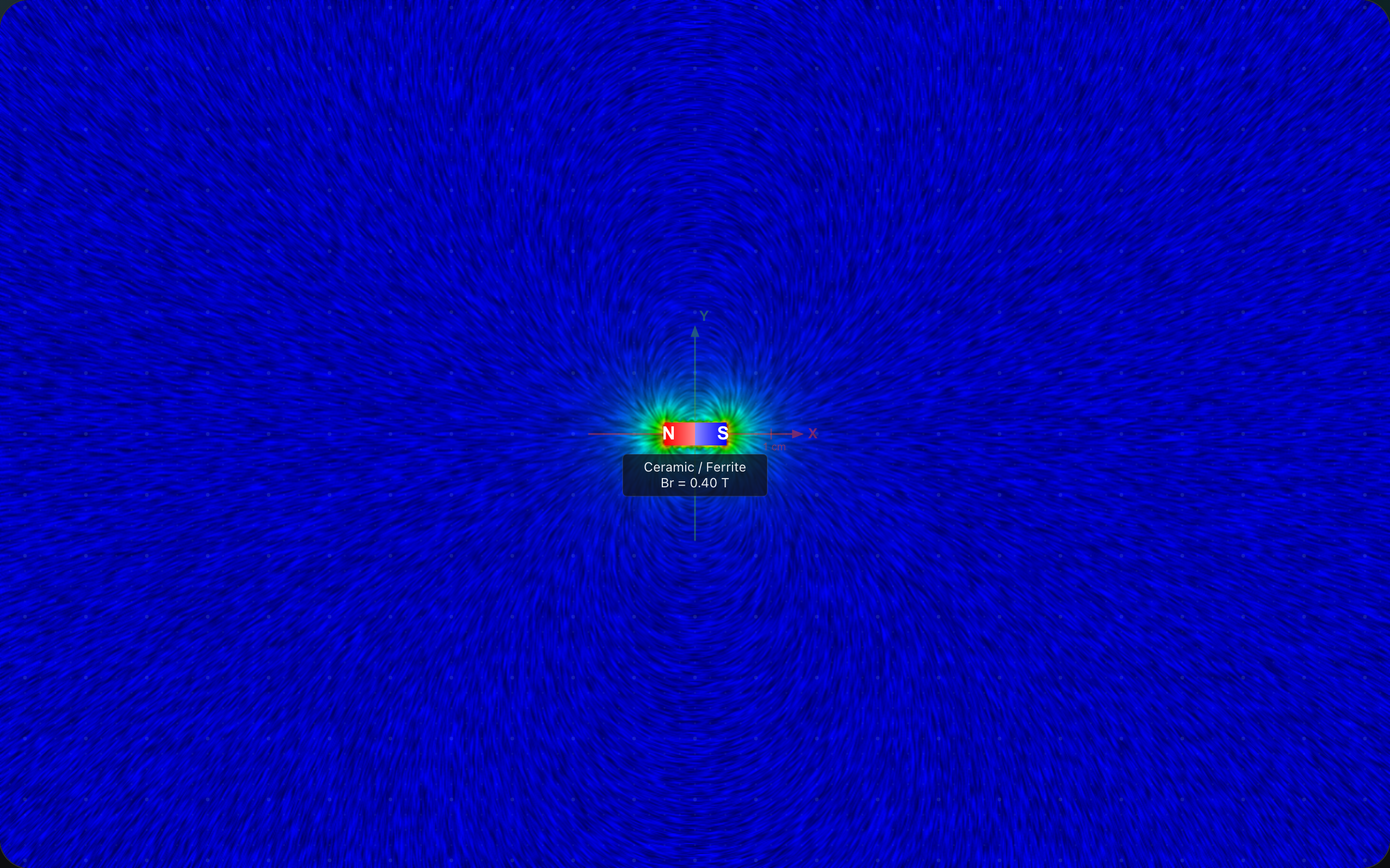
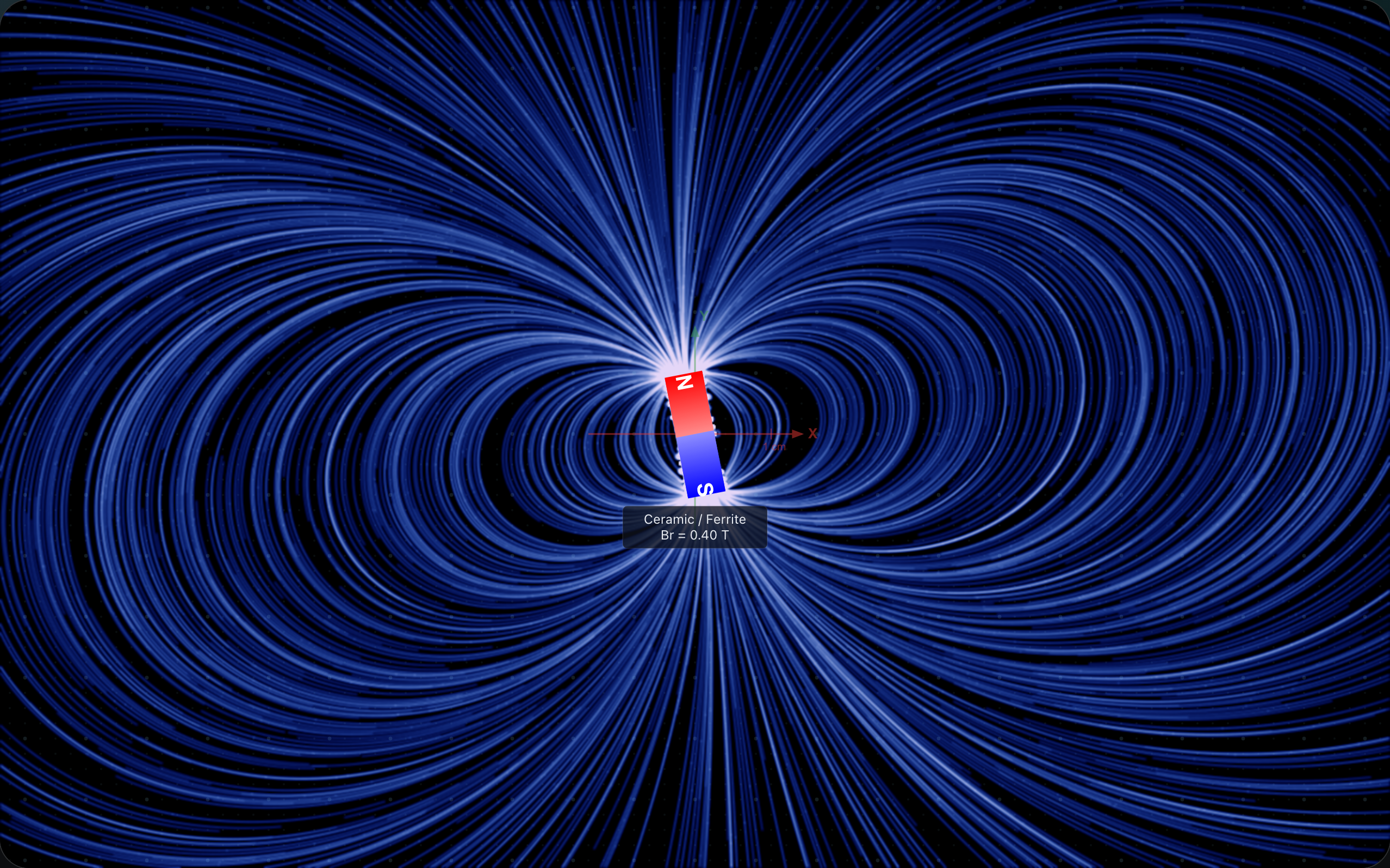
A single ferrite bar magnet. Iron-filings visualization reveals the classic dipole field pattern from N to S poles.
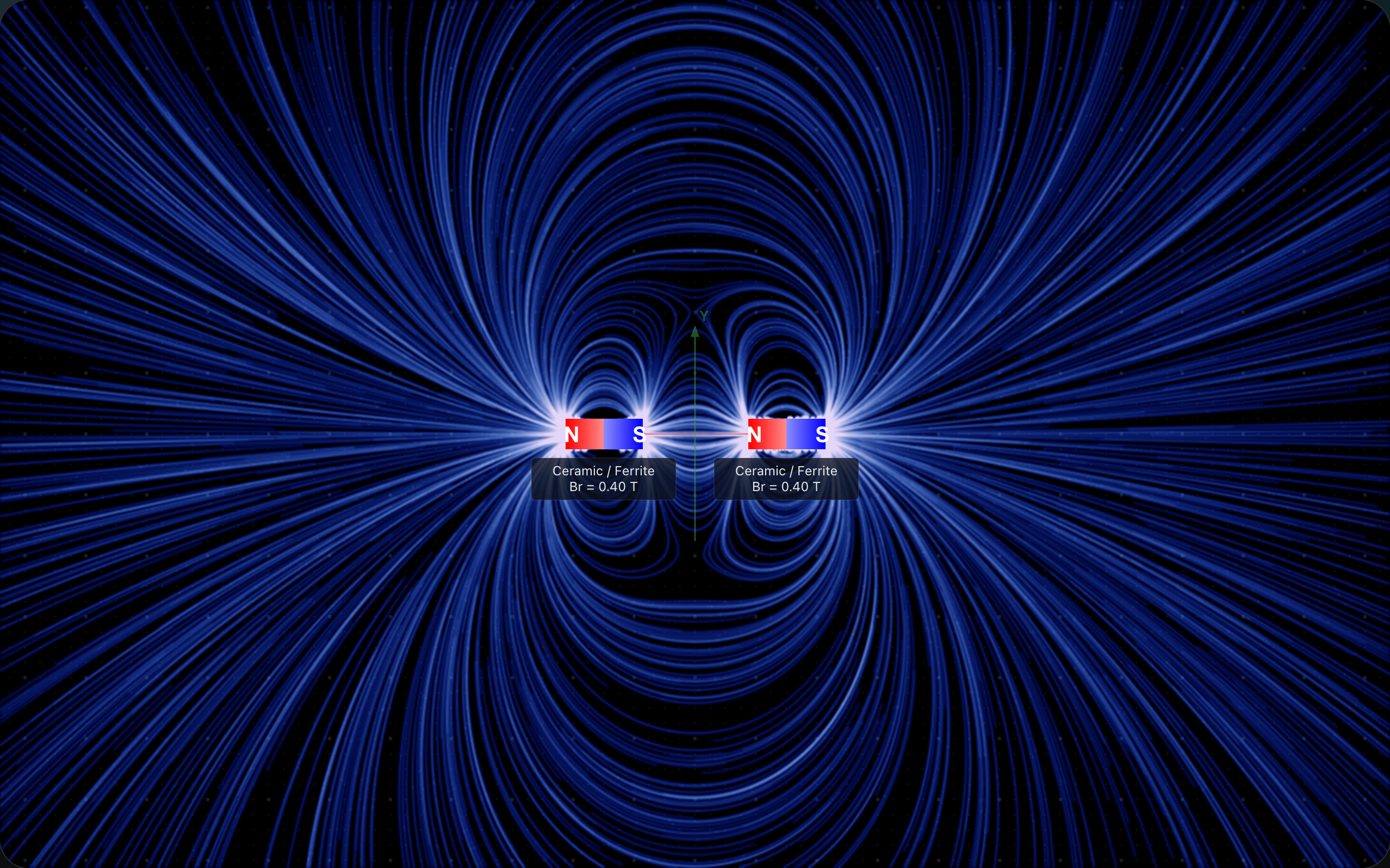
Two collinear bar magnets with opposite poles facing each other — field lines flow continuously between them.
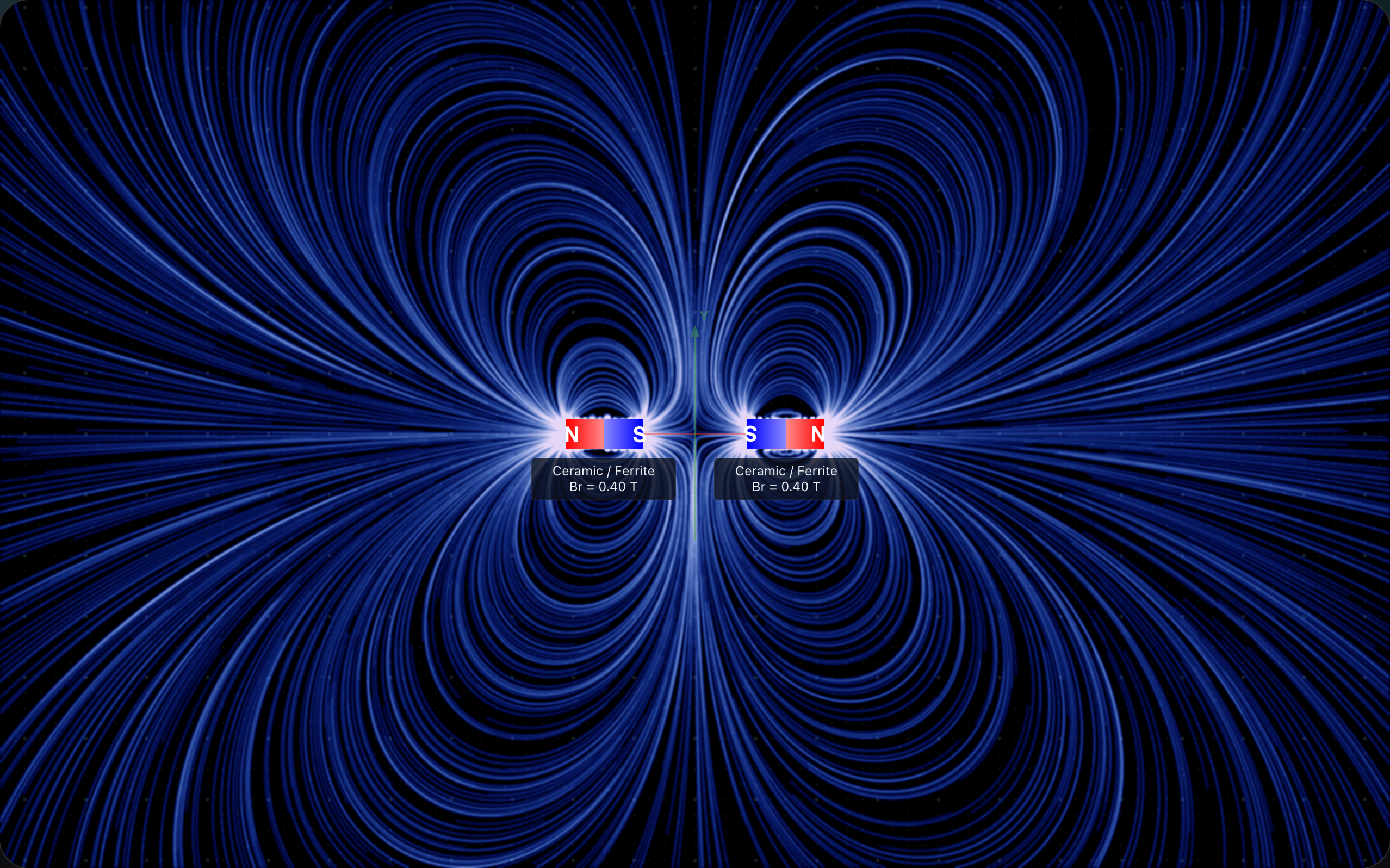
Two collinear bar magnets with like poles facing each other — field lines bulge outward and the magnets repel.
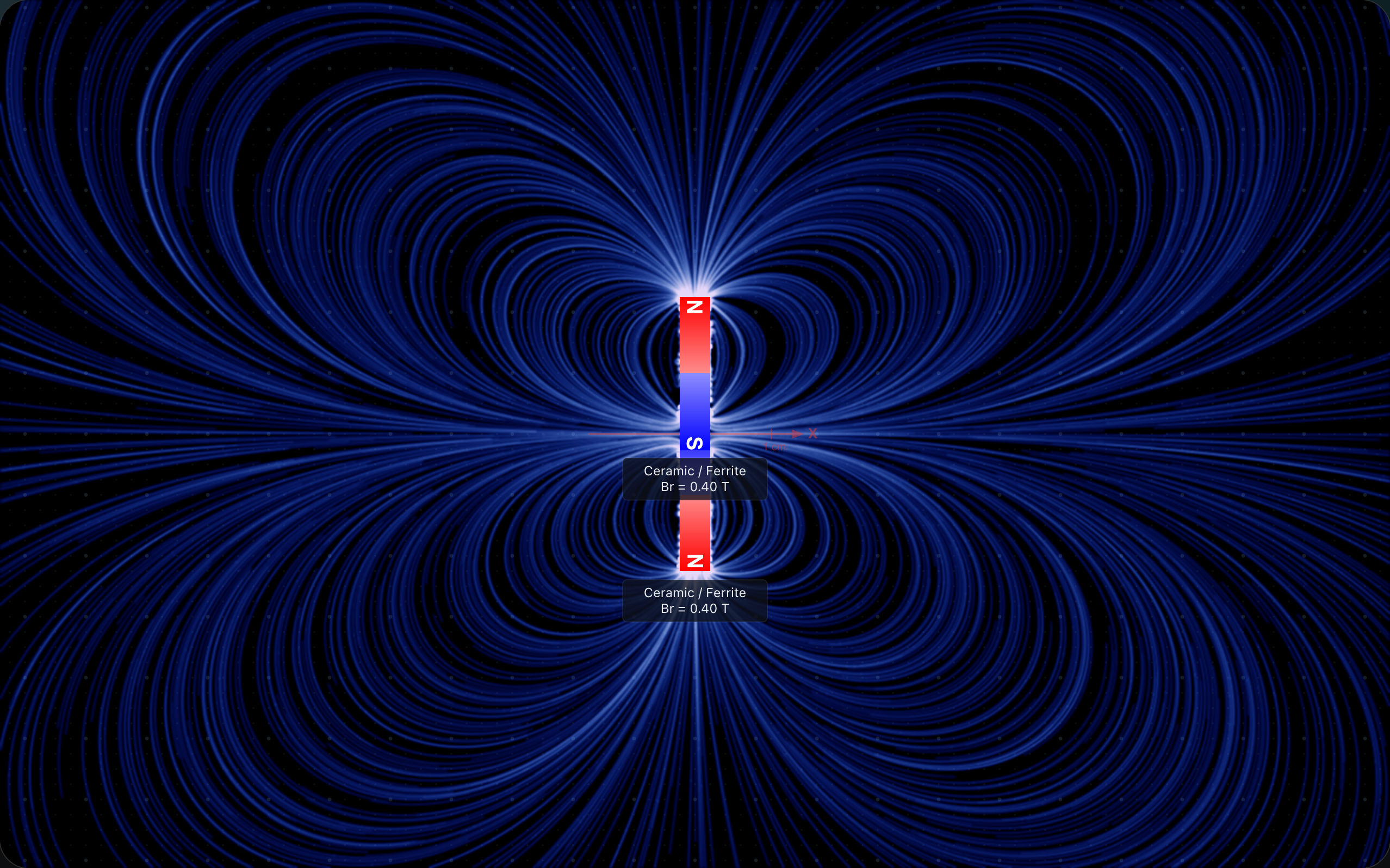
Two flat magnets with N and S poles facing across a small gap — approximately uniform field in the gap, like a classroom horseshoe magnet.
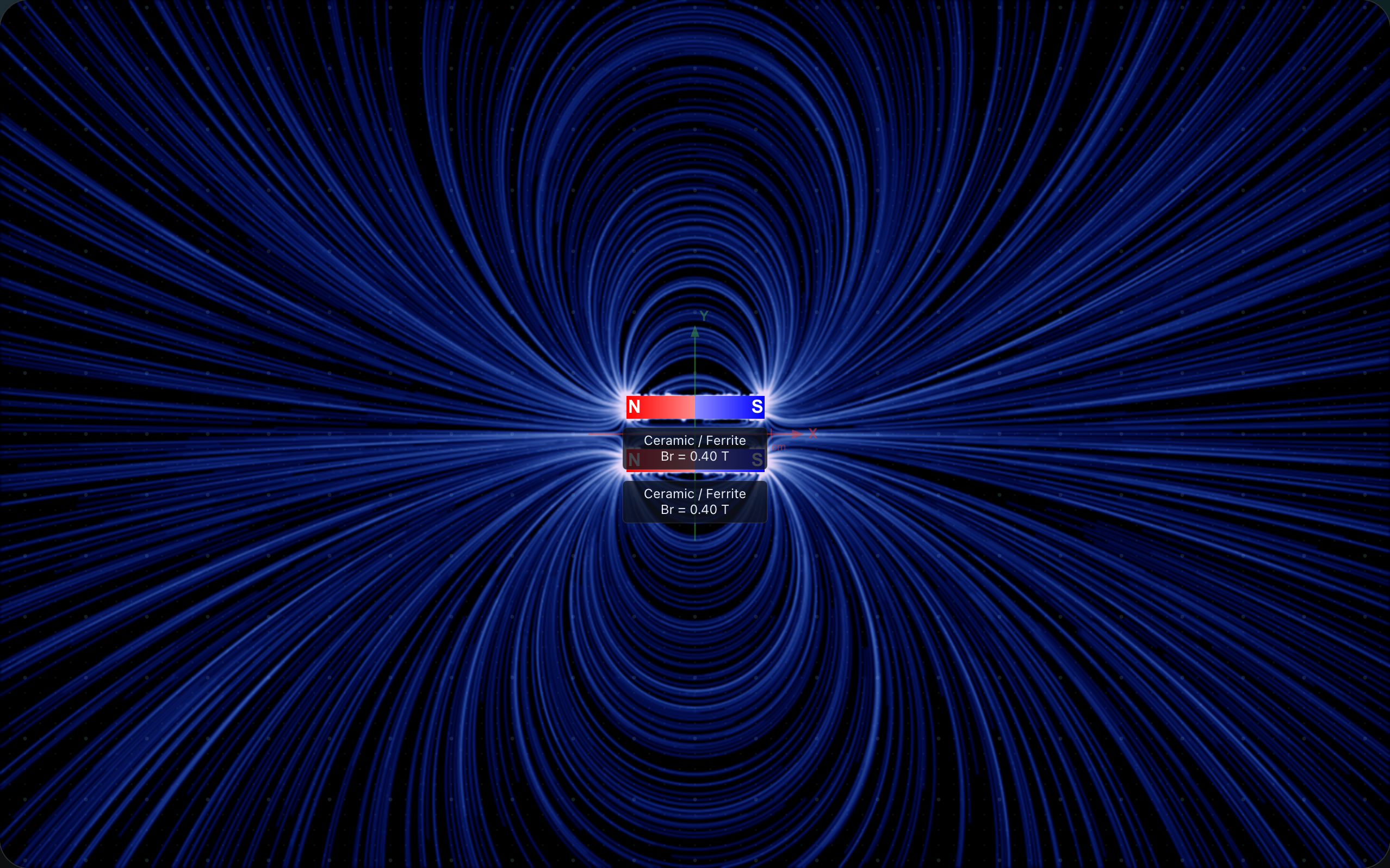
Two parallel bar magnets magnetized in the same direction — their dipole fields superpose into a stronger composite field.
The Lorentz force F = qv × B in action — circular orbits, mass spectrometry, helical motion, and right-hand-rule deflection.
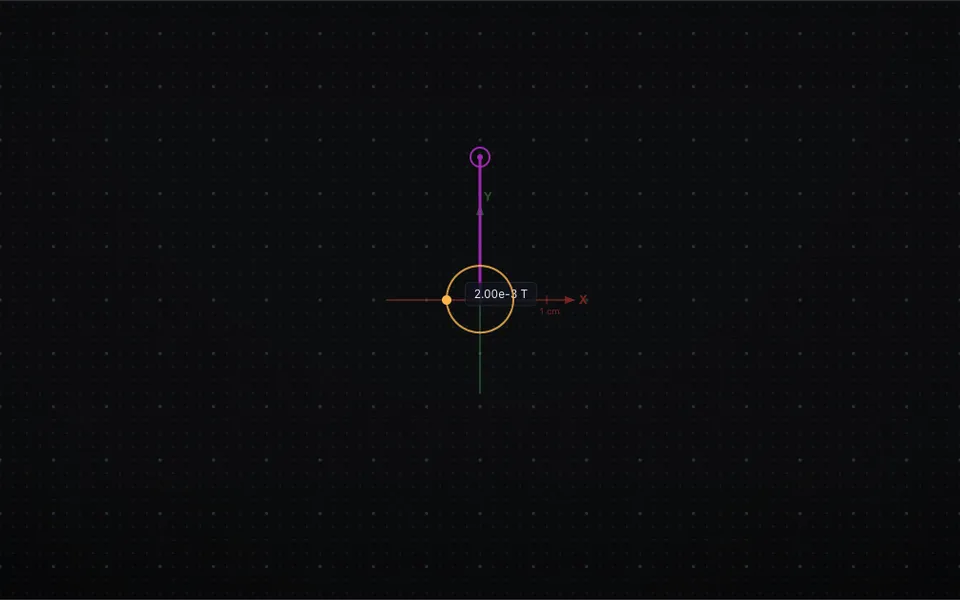
A charged particle launched into a uniform magnetic field traces a circular (cyclotron) orbit — the basis of mass spectrometry.
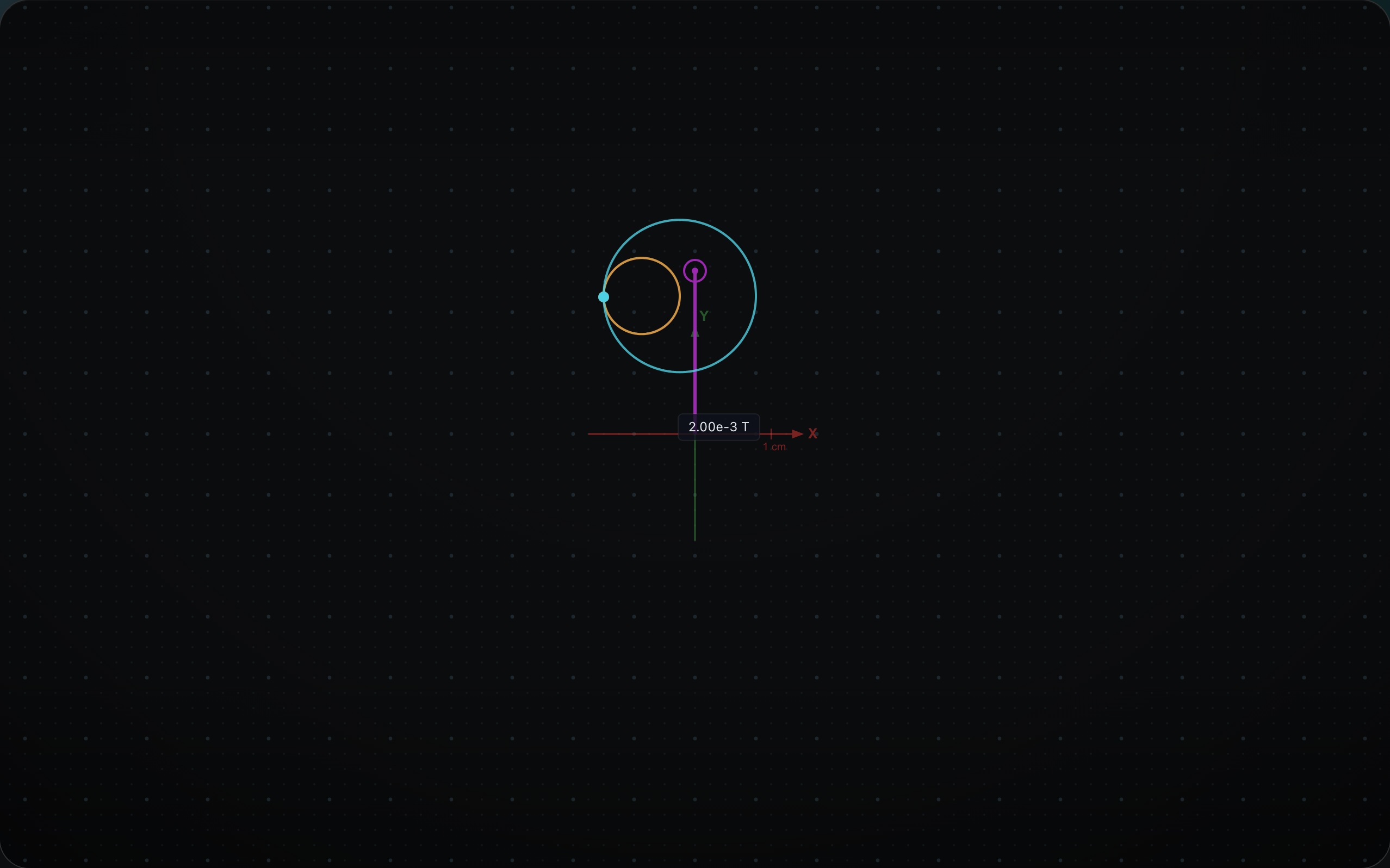
Two particles with the same speed but different charge-to-mass ratios trace different orbit radii — the principle behind magnetic-sector mass spectrometry.
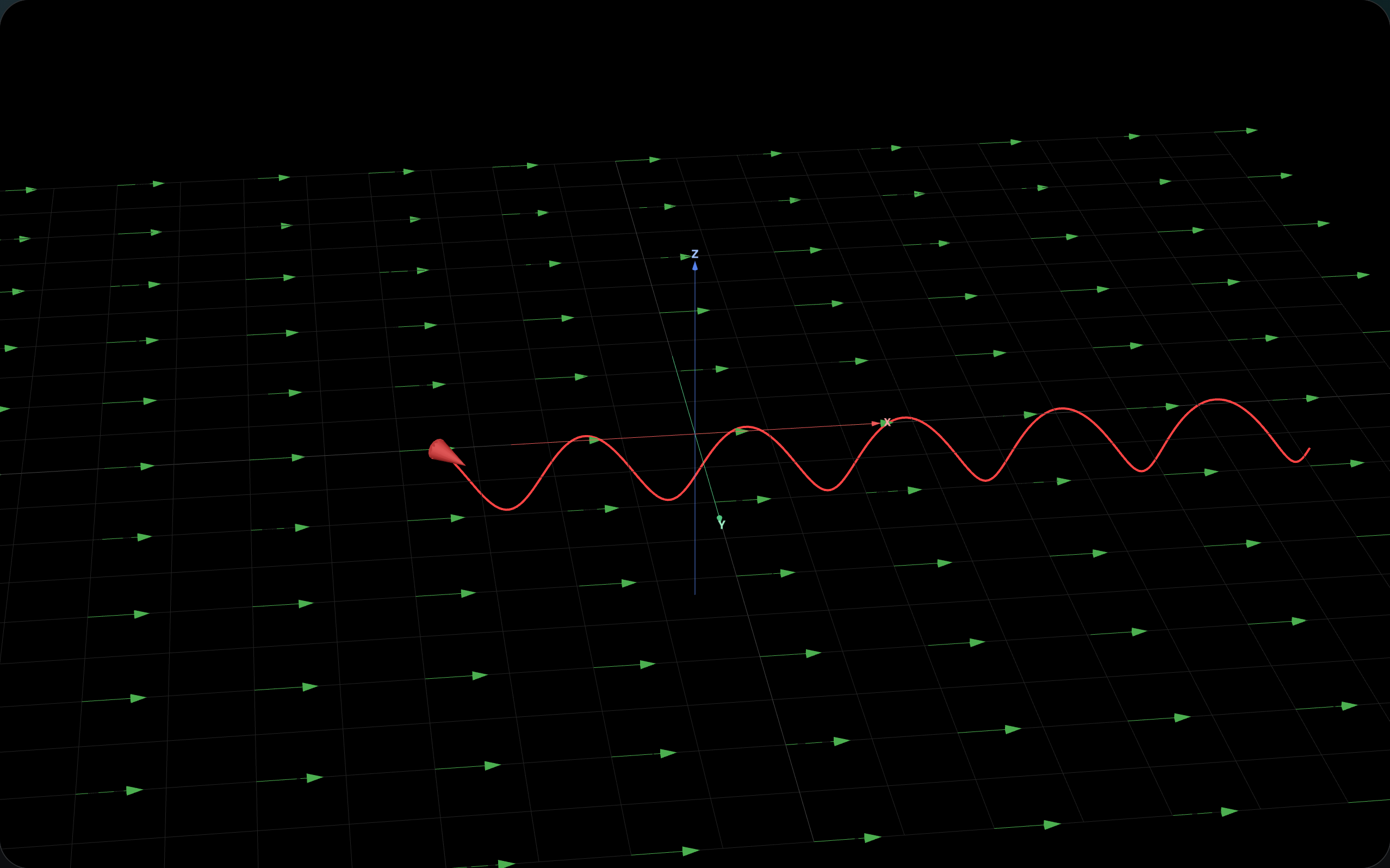
A charged particle with velocity components both parallel and perpendicular to the magnetic field traces a 3D helix.
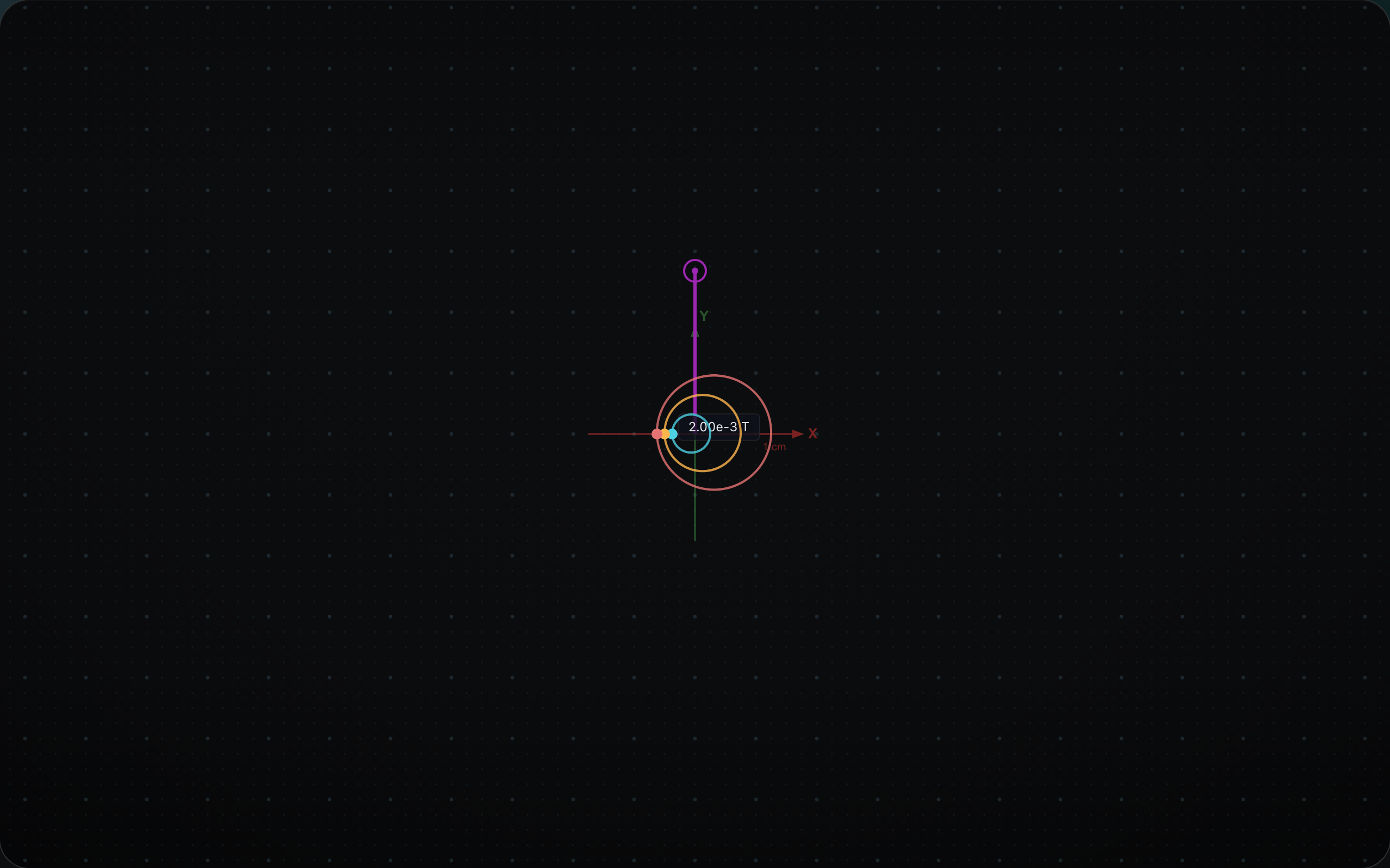
Three particles with identical charge-to-mass ratio but different speeds trace orbits of different radii — visceral demonstration that r ∝ v.
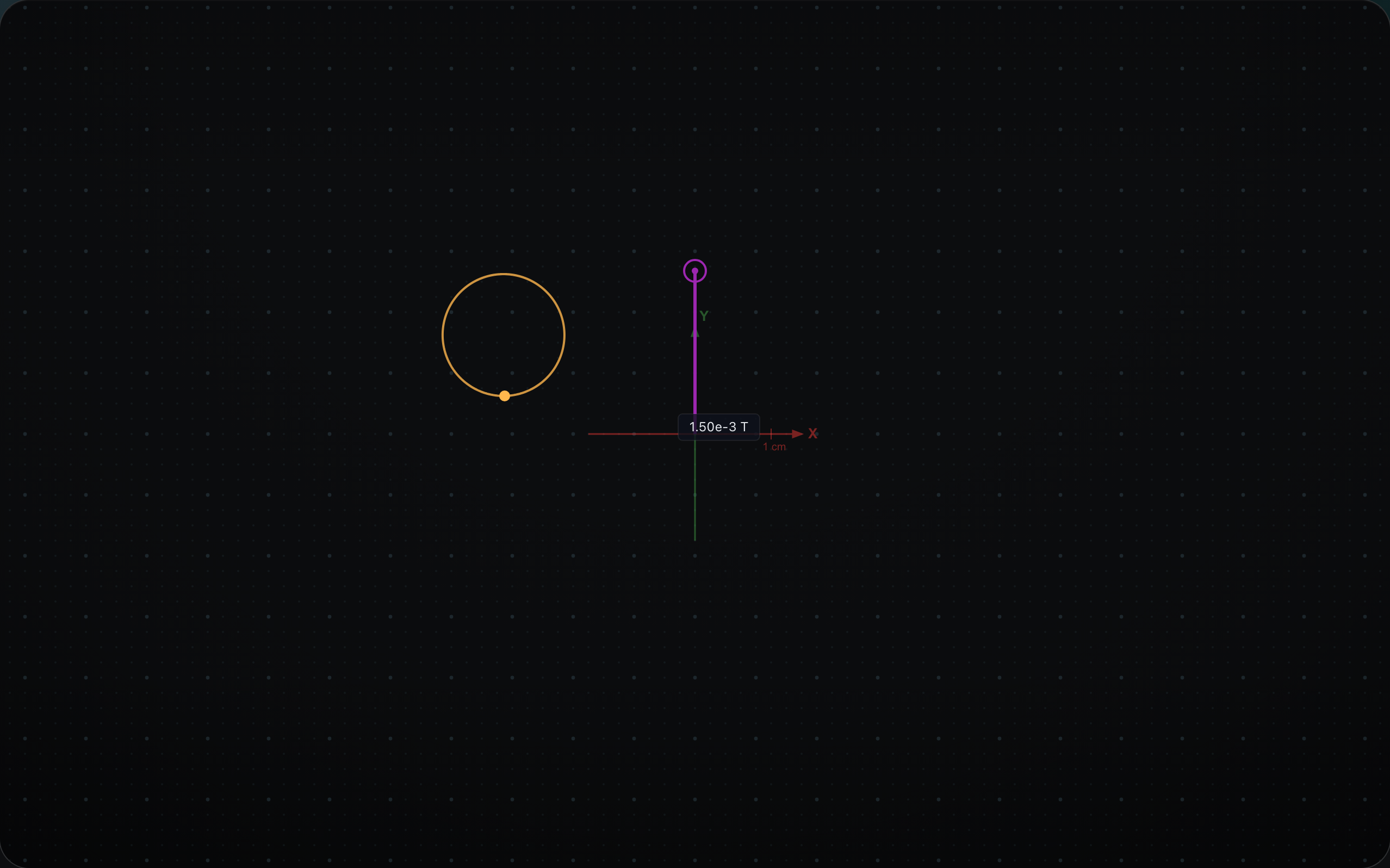
A charged particle entering a uniform magnetic field is deflected by the Lorentz force F = qv × B — direct visualization of the right-hand rule.
Same physics, different rendering — a side-by-side teaching tool for comparing iron-filings to LIC.
Real-world geometries that students recognize before they learn the physics.